
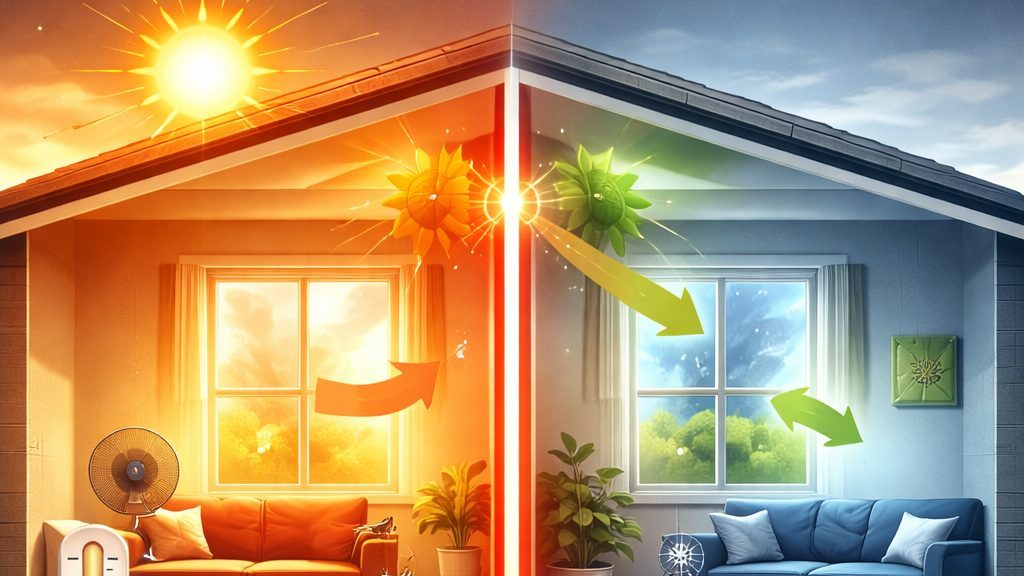
You open your electricity bill and think… “Why is my bill so high?”. Maybe you’ve already tried adjusting the thermostat, using fans, or running the AC less—but the bill still keeps climbing. Here’s something many Dallas homeowners don’t realize: your windows can have a direct impact on how hard your AC works, which affects how much electricity you use every month. In this article, we will try to answer the most common questions.
How Windows Directly Affect Your Energy Usage?
In Texas summers, the most common reason is excess heat entering your home faster than your AC can remove it. Old windows—especially single-pane glass, foggy insulated units, or windows without Low-E coatings—allow intense solar heat to pass directly through the glass. Poor seals around the frame make it worse by letting hot outdoor air leak in while cooled air escapes.
The solution: Improving window performance—by upgrading glass, fixing failed seals, or replacing inefficient units—reduces heat gain and allows your AC to maintain temperature without running constantly.

Could my old windows really be the problem?

Yes. Older windows are often a major source of energy loss, even if they don’t look damaged. Single-pane glass, outdated double-pane units, and worn seals provide little resistance to heat transfer. This causes the HVAC system to work harder throughout the day, increasing electricity usage.
The solution: Evaluate whether the issue is the glass, the seal, or the frame. In many cases, upgrading the glass or sealing the window properly restores efficiency without full replacement.
Why is one room hotter than the rest?
This usually happens when a room has sun exposure combined with inefficient windows. West- and south-facing windows without Low-E glass allow solar heat to build up quickly. If the window also has air leaks or failed insulation, that room will heat up faster than the rest of the house.
The solution: Replace or upgrade the glass in those specific windows with Low-E insulated units to reduce solar heat gain and balance indoor temperatures.

What does foggy glass mean—and does it raise my bill?
Foggy glass means the seal in the insulated glass unit has failed. Once the seal breaks, the insulating gas escapes and moisture enters, causing the glass to lose most of its insulating value. Heat then passes through the window much more easily.
The solution: Replace the insulated glass unit (IGU). If the frame is still in good condition, glass replacement alone restores insulation and improves energy efficiency.
Can broken or cracked glass affect my electricity bill?
Yes. Cracks and broken glass compromise the window’s seal and insulation, allowing air leakage and increasing heat transfer. This creates drafts and hot spots that force the AC to work harder to compensate.
The solution: Replace damaged glass with properly sealed, correctly fitted safety glass to restore the window’s thermal performance and stop energy loss.
Do I need to replace the whole window or just the glass?
It depends on the condition of the frame. If the frame is solid and the issue is foggy glass, broken panes, or failed seals, replacing only the insulated glass is often sufficient. If the frame is warped, rotted, or leaking, full window replacement is usually the better long-term solution.
The solution: A professional inspection helps determine which option restores efficiency without unnecessary cost.
Is Low-E glass actually worth it in Texas?
Yes. In Texas heat, Low-E glass significantly reduces solar heat gain by reflecting heat while still allowing natural light inside. This keeps indoor temperatures more stable and reduces how hard the AC has to run during peak summer months.
The solution: Installing Low-E insulated glass—either through glass replacement or full window replacement—helps lower cooling demand and improve overall comfort.
If your electricity bill spikes every summer, your windows may be the reason—especially if you have single-pane glass, fog between panes, cracked glass, or worn seals. Those issues let Texas heat move into your home fast and force your AC to work harder all day. Fixing the right window problem—whether it’s Low-E glass, insulated glass replacement, or full window replacement—can improve comfort immediately and reduce wasted energy month after month.
ALUMIN offers free window inspections and quotes in Dallas–Fort Worth. We’ll check your glass, seals, and frames, explain exactly what’s causing the heat gain, and recommend the most cost-effective fix—glass replacement or full replacement—with no pressure. Call or message us today to schedule your free estimate and start lowering your energy bill.
Get your new window today.
Let’s take the next step toward your project.