
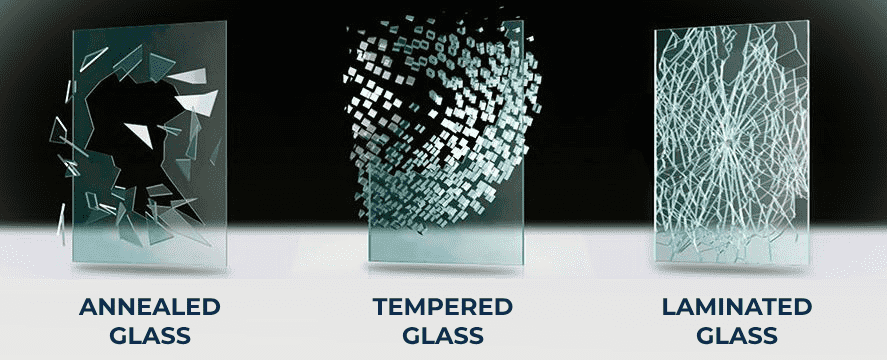
Are you an experienced builder, project manager, property manager, designer or just a dallas resident who has wondered. What is the difference between tempered glass, regular glass and laminated glass? At ALUMIN LLC, as experts specializing in commercial and residential glazing in Dallas and surrounding cities, we always know when and what kind of glass to use. We are always ready to give you a free consultation to find the right design solution for your project.
Glass plays a crucial role in modern construction and design. Whether you’re working on a commercial storefront, residential window installation, or a high-rise building in Dallas, TX, selecting the right type of glass is essential for safety, durability, and functionality. This article breaks down the three most common types of glass—annealed, laminated, and tempered—to help you understand their differences, key characteristics, and where they are used.
What Is Annealed Glass?
Annealed glass is the most basic type of glass. It is created by slowly cooling down molten glass to release internal stress, making it easy to cut and shape.
Key Characteristics of Annealed Glass
Affordable: It is the least expensive type of glass.
Easily breakable: When broken, it shatters into large, sharp pieces.
Easy to work with: Can be cut, drilled, and shaped before installation.
Because annealed glass is fragile, it is not recommended for safety applications.
However, it is commonly used in: Picture frames, Cabinet doors, Basic home windows (when safety is not a concern).
Annealed glass cannot be used in high-traffic areas, doors, or storefronts unless laminated or tempered to meet safety glazing standards.

Tempered Glass: High-Strength and Safety-Grade Glass
Tempered glass is up to 4-5 times stronger than annealed glass due to a controlled heat treatment process. It is considered safety glass because it shatters into small, blunt-edged fragments rather than sharp shards.
Key Features:
Strength: 4-5 times stronger than annealed glass
Breakage Pattern: Breaks into small, dull fragments
Applications: Used in storefronts, glass doors, shower enclosures, glass railings, and curtain walls
Dallas Building Code Considerations:
Required for:
Commercial storefronts and entrances
Glass doors, railings, and partitions
Exterior glazing in hazardous areas
Must comply with ANSI Z97.1 and CPSC 16 CFR 1201 safety standards

Laminated Glass: Enhanced Safety and Sound Control
Laminated glass consists of two or more layers of glass bonded with an interlayer (typically PVB or SGP). This construction prevents the glass from shattering upon impact, making it ideal for hurricane-prone areas, soundproofing, and security applications.
Strength: Offers safety, soundproofing, and UV protection
Breakage Pattern: Cracks upon impact but remains intact due to the interlayer
Applications: Skylights, overhead glazing, and curtain walls, Security glass for high-traffic areas, Noise reduction in office spaces.
Dallas Building Code Considerations:
Overhead glazing, skylights, and balcony railings, Hurricane-resistant glazing (if required by project specifications)
Must meet ASTM C1172 and ASTM E1300 standards
The choice between annealed, tempered, and laminated glass depends on safety regulations, durability needs, and application requirements.

Need help selecting the right glass for your project?
At ALUMIN LLC, we specialize in custom glass fabrication, aluminum storefront installation, and curtain wall systems in Dallas-Fort Worth. Whether you need commercial glass installation, structural glass solutions, or high-performance glazing systems, our experts ensure that your project meets Dallas building codes and industry standards.
Contact us for professional glazing solutions in Dallas, TX. We provide custom glass systems, commercial storefront installation, and premium glazing services to meet all your architectural needs.